





Yes, most games can be ported. The more useful question is whether they can be ported to a specific platform at a cost, quality level, and timeline that still makes sense for the studio. A serious game porting feasibility review should answer five decisions before a team commits: whether the codebase can travel, whether the target hardware can carry the experience, what has to change for players, which services and requirements are in scope, and whether the studio can support the work through release and beyond.
That is not caution for its own sake. It is what protects a port from becoming a late, expensive discovery process. A game may run on a new platform and still be the wrong candidate for release there. It may miss performance targets on the hardware that matters, depend on middleware that creates unexpected work, bury essential actions in an interface that no longer fits, or arrive with a QA and certification plan that has no room for the problems it will uncover.
A feasibility decision is therefore a product decision, not a simple technical check. It asks what the game must preserve, where the target platform will force a change, and whether that change is proportionate to the opportunity. The right outcome is not always “port now.” It can be “adapt the plan,” “refactor before committing,” “rebuild this part,” or “do not take this platform on yet.” That clarity is far more valuable than a vague promise that the work should be possible.
What does it actually mean for a game to be feasible to port?
A game is feasible to port when the team can make an evidence based case that the target version can meet its quality bar without creating unacceptable technical, commercial, or operational risk. That includes more than rendering the existing build on new hardware. It covers the engine and codebase, the game’s performance and memory behavior, platform services, controls and UI, content pipeline, testing workload, certification requirements, ownership, and the ability to maintain the version once players have it.
The distinction matters because teams often use “port” to describe very different jobs. One project needs targeted platform integration and a tuned build. Another needs visual and level changes, redesigned UI, new input flows, revised save behavior, engine work, a different memory model, and a long period of device or hardware validation. Both are ports, but they should not receive the same budget, schedule, or risk label.
A useful feasibility review puts a name to that difference early. It tests the most demanding player paths, traces the technical dependencies around them, and asks what has to be true for the new version to feel native rather than merely functional. That gives decision makers a basis for choosing a platform, a release window, and the right game porting delivery model before cost and complexity become harder to change.
Decision one: Can the codebase and engine support the target without becoming a new project?
The first porting question is not which platform looks attractive. It is what the existing project can actually carry. Teams need to understand the engine version, source access, build pipeline, rendering path, plugins, third party middleware, native code, asset import rules, data formats, and the parts of the project that only exist because of the original platform. A title built in Unity, Unreal Engine, GameMaker, or a proprietary stack can all be viable candidates, but each creates a different investigation.
The risk is rarely one dramatic blocker. More often, it is a chain of small dependencies that become expensive together. A legacy plugin may not be supported on the target. A build tool may be tied to one platform. A rendering feature may need an alternative path. A platform service may have been embedded too deeply in gameplay or menus. A game can be technically portable in principle while still needing a level of restructuring that changes the economics of the decision.
That is why a codebase review should produce practical answers, not a vague risk register. Which components can remain intact? Which can be adapted? Which must be replaced or refactored? What needs a proof build before planning continues? Good porting work begins by locating these pressure points while choices are still cheap. It is not about judging an existing game harshly. Every game is built for the context it was originally made for. The work is to understand what must change when that context changes.
Decision two: Can the target hardware carry the game’s real performance, memory, and storage load?
Hardware feasibility must be assessed through representative player scenarios, not an empty benchmark. The meaningful questions are whether the busiest combat, densest scene, longest play session, heaviest menu, fastest transition, and most demanding save or network state can stay within the target device or platform budget. Frame time, memory, storage, streaming, loading, heat, battery use, and stability are part of the same answer because players feel them as one experience.
Mobile makes this visible because a broad support claim can hide enormous variation between devices. Android’s current game performance guidance recommends measuring real scenes, identifying whether a build is CPU or GPU bound, and verifying the impact of optimization work against frame rate and thermal targets. The principle holds across every target. A performance plan that is not based on the scenes players actually reach is a plan for a demo, not for a release.
The technical response should protect the game’s identity, not simply remove detail until a graph looks better. That may mean improving streaming, reducing a recurring spike, changing how an effect is delivered, adjusting a level, setting platform quality rules, or allowing different rendering choices where they do not change what the player values. A target platform deserves a deliberate performance budget, and that budget needs to be proven on real hardware before a release promise becomes expensive to reverse.
Decision three: Does the player experience make sense with the new controls, screen, and context of use?
Controls and UI are often underestimated because they look less dramatic than an engine change. In practice, they can decide whether a port feels considered. A player using a controller, touchscreen, handheld device, keyboard and mouse, or television screen interacts with the game differently. The important actions may need a new hierarchy. Text, menus, prompts, feedback timing, camera behavior, pause flows, tutorials, virtual keyboards, safe areas, and accessibility options may all require design work rather than a simple layout pass.
Valve’s current Steam Deck compatibility documentation makes the point clearly. Its review requirements consider controller access to all content, the correct controller glyphs, text input, a playable default configuration, supported resolution, and text legibility. Those are platform specific requirements, but they express a wider truth: moving a game to a new form factor changes the player’s relationship with it.
A good feasibility assessment identifies the player journeys that will become awkward before the new platform locks the team into them. It asks whether menus can be navigated naturally, whether essential information can be read where the player sits, whether actions have a sensible mapping, and whether the game survives interruptions in the way that platform’s audience expects. Parity does not mean preserving every screen exactly. It means preserving the game’s promise when the way it is played changes.
Decision four: Are platform services, middleware, and release requirements actually under control?
A game is more than the executable and its assets. It may depend on accounts, cloud saves, achievements, multiplayer, matchmaking, analytics, commerce, downloadable content, social features, authentication, anti cheat systems, crash reporting, consent flows, localization, and external SDKs. Each of these can have a platform specific implementation, a licensing implication, a technical limitation, or an approval path. If they are discovered halfway through production, they can affect far more than an integration ticket.
This is where feasibility becomes a joined up production review. Teams need an inventory of what the game calls, what player data and game state it manages, who owns each dependency, and what happens when a service behaves differently on the target platform. They also need to identify any middleware that is version locked, unsupported, or difficult to test outside the original environment. The question is not whether a service can be bolted on later. It is whether the new version can offer a reliable player journey from first launch through post launch updates.
A clear service map avoids false certainty. Some features are straightforward to adapt. Others affect login, entitlement, save state, multiplayer, compliance, or the release schedule. A studio should know which is which before it promises a launch. Where the scope is wider than internal capacity, game co-development can give the project focused technical ownership without splitting the target version away from the lead studio’s product decisions.
Decision five: Can the studio resource the QA, certification, and support cycle that follows?
A port has not become low risk because it reaches a playable build. It has entered the stage where platform combinations, account states, save paths, languages, display modes, controller behavior, network conditions, storage pressure, updates, and platform features reveal their interactions. The final workload can grow quickly because the team is testing a product that has to work inside a new ecosystem, not just a technical conversion that happens to compile.
Certification should be planned as a feedback loop, not a date at the end of a calendar. The feasibility review needs to establish the platform requirements, test ownership, build submission path, issue triage model, release candidate criteria, and buffer for rework. It also needs to decide who is responsible when the version needs a patch, a compatibility fix, a service update, or support after release. That is how teams stop a late certification finding from becoming a launch crisis.
Magic Media’s QA testing services support this work by making player risk visible through configuration, reproduction steps, evidence, severity, and ownership. The goal is not a long list of bugs. It is a test process that gives the team enough clarity to protect quality before a platform holder or player uncovers the problem first.
What should a technical feasibility assessment give the studio before it commits?
A useful assessment does more than say that a target is possible. It produces an actionable route. It identifies what is ready to carry across, what must be adapted, what needs refactoring, what should be rebuilt, and what is still unknown until a proof build is completed. It connects those findings to scope, ownership, dependencies, risk, and the decision that the studio needs to make next.
That output makes tradeoffs honest. A team may decide to reduce the first release scope, choose a different target platform, fund a technical foundation phase, schedule platform work earlier, delay a feature that has weak return, or pursue a remaster or rebuild instead. None of those are failures. They are the choices that prevent a studio from committing the whole team to an answer it has not tested.
The assessment should also make assumptions visible. If its schedule depends on source access, a third party update, platform approval, a middleware license, client provided documentation, or a proof that has not happened yet, that needs to be stated. A porting estimate that hides its assumptions is not a plan. It is a future disagreement waiting to happen.
What does real game porting work reveal about the feasibility decision?
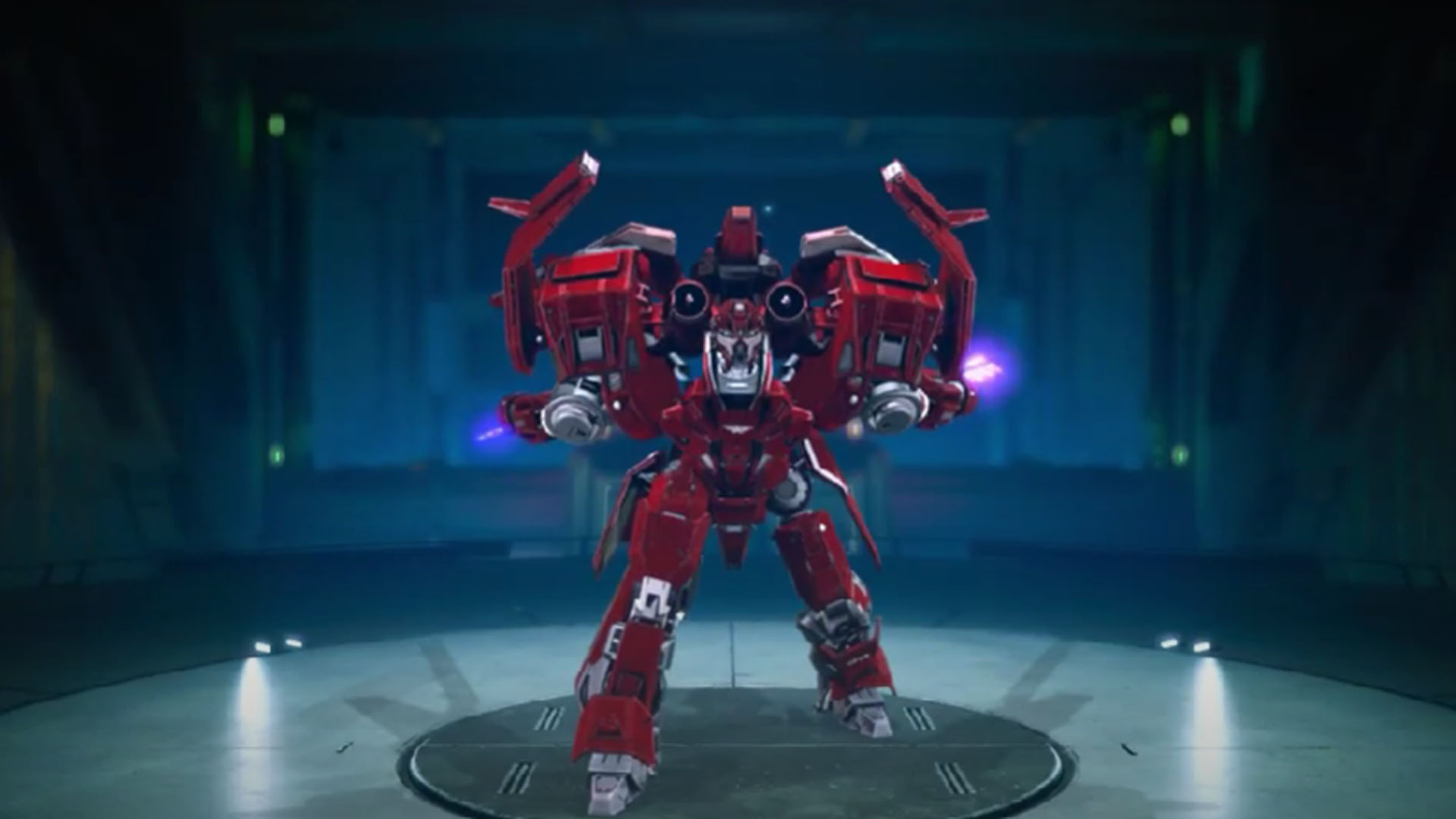
Magic Media’s Nintendo Switch port of UFO ROBOT GRENDIZER: The Feast of the Wolves shows why feasibility is never just an engine label. The Unity title had already launched on PC, PlayStation, and Xbox when Magic Media was tasked with bringing it to Nintendo Switch. The documented work involved changes to the graphical pipeline, visual asset fidelity, and level design, with performance work for both docked and handheld play.
The lesson is not that every Unity project will require the same response. It is that a target platform may change how a game spends performance and how its content must be delivered, even when the core world and mechanics remain recognisable. A feasibility review needs to expose that before a project is priced as a routine conversion. The correct question is not “Does Unity support the platform?” It is “What must this Unity project become to meet the target platform’s quality bar?”
Magic Media’s work on Enotria: The Last Song makes the same point from another direction. The team supported Jyamma Games with porting, co-development, and optimization while the project moved from Unreal Engine 5.3 to 5.4. The work included performance benchmarking, project specific engine source changes, DLSS, XeSS, and FSR integration, a shader compilation screen, and QA support. The project did not need a generic optimization checklist. It needed an answer proportionate to its actual engine, performance, platform, and production constraints.
Those examples do not mean Magic Media caused the complete commercial outcome of either title. They show the kind of evidence a serious feasibility discussion needs: a clear technical starting point, a target specific problem, a defined scope of work, and a measured route to a version players can trust.
When should a studio port, remaster, refactor, or rebuild?
A port is the right answer when the core game, technical foundation, and player promise are strong enough to carry into the new environment with sensible adaptation. A remaster may be the better route when the experience is proven but needs a meaningful visual or technical refresh. A refactor is appropriate when the game can still travel but key systems are too fragile or platform specific to support the release safely. A rebuild becomes worth considering when the work required to preserve the experience is so extensive that the team would be maintaining two versions of the same problem.
There is no universal threshold between those paths. The decision depends on the state of the codebase, the target platform, the audience, the opportunity, the available time, and the version the studio will have to support later. What matters is that the label reflects the work. Calling a rebuild a port does not make it smaller. Calling a large port a quick conversion does not make its risk disappear.
That is why the first conversation should be candid. Which elements are essential to the game’s identity? Which technical choices are no longer serving the target version? Which sacrifices would damage the player experience, and which would be invisible? A studio that answers those questions before commitment is far more likely to choose a delivery route it can defend to players, platform holders, and its own team.
What should be decided before a game porting project begins?
Before the project begins, the studio should be able to describe the target player experience, the technical baseline, the known gaps, the proof work still required, the budget and schedule assumptions, ownership across internal and partner teams, the quality gates, the certification path, and the post launch plan. This is not paperwork that slows development. It is how a team prevents the wrong work from becoming urgent later.
The value of a port should remain connected to the version that will reach players. More platforms can extend a game’s audience and life, but only when each version is coherent, stable, and supportable. Our guide to game porting in 2026 explores that wider planning, optimization, and console migration context. This feasibility guide is the decision that comes before it: should the studio commit, and what must be true if it does?
The best answer is not always the fastest one. It is the one that lets the team invest with open eyes. A clear feasibility review turns porting from a hopeful expansion plan into a product decision grounded in technical reality, player needs, and a release strategy built to hold up after launch.
Ready to understand what your port will really require?
Share your build, intended platforms, and release goals. Magic Media can help turn feasibility questions into a clear technical assessment, a realistic plan, and a stronger route to launch.