



In cinematic horror, animation protects the player’s belief in the scene. A stiff reaction, an unconvincing grip, or a contact point that feels wrong can break the tension before the fear has time to land. Performance is not surface polish in a story-led horror game. It is the physical language of suspicion, vulnerability, danger, and survival.
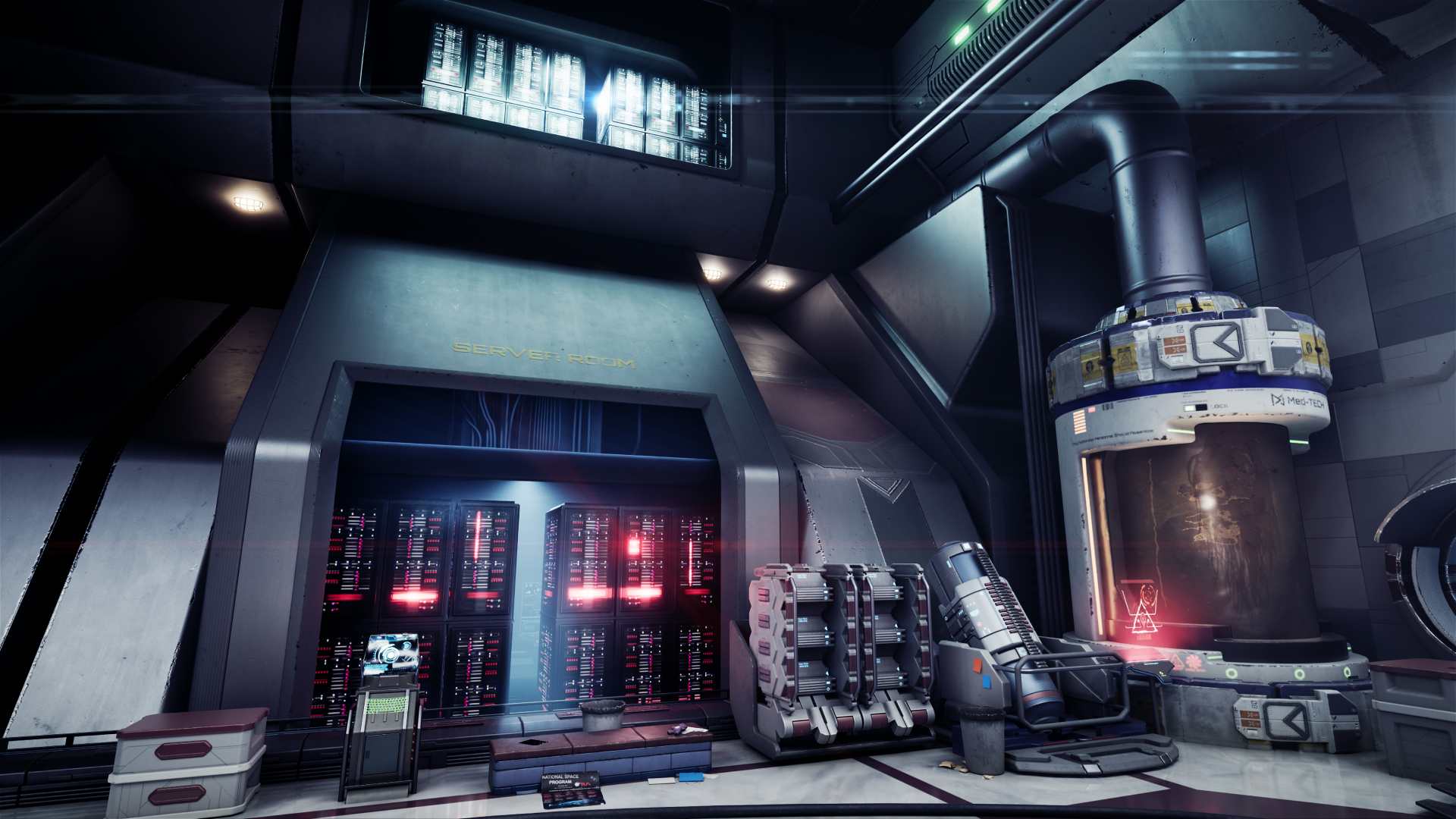
That is why Directive 8020 is a useful case study in specialist animation support. Developed by Supermassive Games and set within The Dark Pictures universe, it combines cinematic sci-fi horror, branching narrative, survival gameplay, and an alien threat capable of mimicking its prey. Every character movement therefore has to carry more than action. It has to create uncertainty.
In that kind of experience, believable performance is not optional. Players need to trust the crew, read their body language, question their behaviour, and feel the pressure behind every interaction. Magic Media supported Directive 8020 through specialist mocap processing, animation cleanup, and technical animation production, working within Supermassive Games’ established Maya and ShotGrid workflow to refine character performance without disrupting the project’s established creative direction.
This is the type of production challenge Magic Media’s 3D animation services are built to support. The objective is not simply cleaner data. It is a stronger performance, more credible physical interaction, and specialist capacity that works inside the client’s pipeline rather than creating friction around it.
Why Does Animation Matter So Much in Cinematic Horror Games?
Animation matters in cinematic horror because fear depends on belief. Players need to trust the world before they can feel threatened by it. The environment can be beautifully built, the lighting can be atmospheric, and the sound design can be sharp, but unnatural character movement can fracture that illusion immediately.
In Directive 8020, that belief is particularly important because the horror is built around trust and uncertainty. The crew is hunted by an alien organism that can mimic its prey, which means character behavior becomes part of the tension. A glance, pause, physical hesitation, or sudden movement can influence how the player interprets a scene.
Technical animation and mocap cleanup therefore serve more than visual polish. They help preserve the emotional intention of the original performance while ensuring movement remains stable, readable, believable, and technically reliable inside the game. In cinematic horror, animation becomes part of the storytelling system itself.
What Was the Core Animation Challenge on Directive 8020?
The core challenge was refining large volumes of mocap and animation data while preserving the nuance of the original actor reference. This was not simply a matter of making animation look cleaner. The work needed to protect the underlying performance while improving body mechanics, pose accuracy, posture, loops, transitions, and overall scene reliability.
Supermassive Games already had an established production pipeline, so Magic Media needed to integrate into the client’s workflow rather than reshape it. The work involved Maya scene preparation, technical setup, secure data handling, and ShotGrid-based production management. That pipeline discipline becomes essential when an external animation team is supporting complex cinematic scenes at scale.
The creative challenge was equally important. Characters needed to interact naturally with props, environments, and one another while maintaining the emotional tone of each scene. In cinematic survival horror, a hand finding the correct grip, a character shifting their weight under stress, or a reaction landing with the right timing can determine whether a scene feels physically convincing or visibly staged.
How Did Magic Media Support the Animation Pipeline?
Magic Media supported Directive 8020 through a structured animation workflow focused on mocap processing, animation cleanup, technical animation, and performance polish. The team worked within the client’s pipeline, preparing Maya scenes, managing animation requirements, and using ShotGrid to support production updates and feedback alignment.
The animation work focused on improving body mechanics, matching poses accurately, refining loops, correcting posture, and strengthening character movement while remaining faithful to the actor reference. That balance is critical in cinematic production. Cleanup that becomes too aggressive can flatten a performance, while insufficient refinement can leave movement feeling unstable or disconnected from the scene.
Prop interaction, hand and finger animation, and contact refinement were also important parts of the work. These details can appear small in isolation, but they are often where physical believability lives. Characters need to touch objects with weight, grips need to feel intentional, and bodies need to connect with the environment rather than appear to float around it.
This type of support connects naturally with wider game development services, where technical and creative disciplines need to work together to strengthen execution, production stability, and the final player experience.
Why Is Mocap Cleanup More Than a Technical Task?
Mocap cleanup is more than a technical task because it directly influences how players read emotion, intention, and physical reality. Raw mocap provides a strong foundation, but it rarely arrives ready for final cinematic use. It needs refinement, adjustment, correction, and polish before it can carry the full weight of a finished scene.
On Directive 8020, the objective was not to overwrite the actor’s performance. It was to refine it. Every correction needed to support the original emotional direction of the scene while improving movement quality and technical reliability.
That requires artistic judgment alongside technical skill. Body mechanics are not simply physics. They communicate character. Posture can indicate fear. Timing can suggest hesitation. A small shift in weight can make someone appear exhausted, alert, suspicious, or vulnerable. In cinematic games, those decisions become part of how the player experiences the story.
How Does Technical Animation Support Player Immersion?
Technical animation supports immersion by making character movement feel consistent, grounded, and connected to the world. Players may not consciously identify clean transitions, accurate pose matching, stable contacts, or refined body mechanics, but they often notice the absence of those things immediately.
Directive 8020 depends on that sense of physical credibility. The game places players inside a high-pressure sci-fi survival scenario where danger is close, trust is unstable, and decisions can carry consequences. Believable movement helps make that situation convincing. Broken or unnatural movement can weaken the tension.
This is why technical animation plays such an important role in cinematic horror. It protects continuity between scenes, supports believable interaction, reduces visual distraction, and helps characters feel physically present. For studios developing cinematic or performance-led games, game co-development can bring that specialist capability into the wider production without separating animation from the systems and creative direction around it.
What Role Did Pipeline Integration Play in the Project?
Pipeline integration was essential because Magic Media needed to operate inside Supermassive Games’ established production structure. That meant aligning with Maya scene setup, technical animation requirements, secure production processes, and ShotGrid workflow management.
This kind of integration separates specialist production support from disconnected outsourcing. On a project with complex scenes, substantial animation volumes, and strict creative standards, the external team cannot operate in isolation. It needs to understand the client’s tools, expectations, review process, technical requirements, and production rhythm.
Strong pipeline integration keeps work moving without creating unnecessary friction for the internal team. Feedback can be reviewed efficiently, priorities remain visible, and animation updates stay aligned with the approved workflow. For cinematic production, that consistency matters because quality is created across hundreds of connected scenes and assets rather than in isolated moments.
Why Are Prop Interaction and Contact Refinement So Important?
Prop interaction and contact refinement create physical believability. When a character touches a surface, grips an object, leans against the environment, or interacts with another character, the animation needs to sell that contact. Floating hands, weak grips, sliding feet, or a body that does not respond naturally can make an otherwise polished scene feel artificial.
In Directive 8020, those details matter because the cinematic direction depends on grounded performance. Characters are not simply moving through scenes. They are surviving inside them, interacting with the ship, objects, threats, and one another under pressure.
Magic Media’s animation support included refinement of these moments through hand and finger animation, contact work, posture correction, and environmental interaction. Players may never consciously identify an individual contact adjustment, but collectively these details shape whether the scene feels physically convincing.
What Does Directive 8020 Reveal About Modern Game Animation?
Directive 8020 demonstrates how modern game animation has become increasingly technical, cinematic, and integrated with wider production pipelines. Animation teams are not working only on isolated movement clips. They are contributing to character performance, storytelling, physical believability, gameplay readability, technical stability, and the production systems required to deliver all of those things consistently.
This is particularly important in narrative horror, where the line between cinematic performance and gameplay experience can be thin. Players need to believe that characters belong in the world, that their movement reflects emotion and intention, and that interactions support rather than interrupt the tone of the story.
Magic Media’s work on Directive 8020 shows how specialist animation support can operate within that environment. The project required technical discipline, secure collaboration, pipeline integration, and close attention to performance. For productions where animation, atmosphere, and storytelling are tightly connected, those capabilities need to function as one system rather than separate services.
How Did Magic Media’s Work Support the Final Experience?
Magic Media’s contribution supported the cinematic quality and performance-driven nature of Directive 8020 through cleaner body mechanics, more believable movement, improved prop and environmental interaction, stronger contact refinement, and more polished final scenes.
The collaboration also reinforced the importance of communication. Daily alignment between the client and internal team helped feedback move efficiently, kept priorities visible, and supported consistent progress within the approved pipeline. In complex narrative production, that coordination is one of the mechanisms through which quality is protected.
By integrating into the Maya and ShotGrid workflow, Magic Media could provide specialist animation support while respecting Supermassive Games’ established process. The value was not simply cleaner animation. It was stronger support for the atmosphere, storytelling, and character believability on which Directive 8020 depends.
Why Does This Case Study Matter for Studios Building Cinematic Games?
This case study shows how specialist animation support can strengthen cinematic game development without disrupting the original creative direction. Studios working on narrative, horror, sci-fi, adventure, or other performance-led games may need additional animation expertise, but that expertise still needs to respect the project’s pipeline, tone, tools, and vision.
Directive 8020 demonstrates one way that relationship can work. Magic Media supported the existing direction by refining performance data, improving animation quality, and helping scenes reach a more polished state inside the client’s established production system.
For studios building cinematic games, the wider production lesson is that animation support should not be treated only as cleanup brought in at the end. When story, tension, physical performance, and character believability are central to the experience, specialist animation becomes part of the performance pipeline itself.
What Can Studios Learn From Directive 8020?
Directive 8020 shows that cinematic quality depends on more than strong writing, visuals, or technology in isolation. It depends on how effectively each production discipline supports the player’s belief in the world. Animation is a major part of that belief because it turns character intention into visible behavior.
The project also demonstrates why specialist production support works best when it integrates into the existing development structure. A partner that understands the tools, respects the creative direction, follows the established review process, and contributes specialist expertise can expand production capability without forcing the internal team to rebuild its workflow around the external support.
For ambitious narrative projects, that model gives studios access to additional technical and artistic capability while allowing the original team to remain in control of the vision. The stronger the integration, the easier it becomes for external animation work to feel like part of the production rather than something attached to it.
Animation That Protects the Performance
Directive 8020 shows how specialist animation support can strengthen cinematic horror by improving performance quality, movement believability, and scene polish. Magic Media’s work across mocap processing, animation cleanup, technical animation, prop interaction, and contact refinement supported the performance-driven nature of Supermassive Games’ sci-fi survival horror experience.
The project also demonstrates the importance of pipeline integration. By working inside the client’s Maya and ShotGrid workflow, Magic Media could support production with consistency and respect for the established creative direction. That matters in cinematic games, where quality is often created through hundreds of small technical and creative decisions that all need to serve the same emotional goal.
For studios building narrative, horror, sci-fi, or performance-led games, the lesson is straightforward: animation is not simply movement. It carries atmosphere, character, physical credibility, and tension. Explore the Directive 8020 case study to see how Magic Media supported Supermassive Games with mocap processing, animation cleanup, and technical animation production.
Building a mobile game players want to return to?
The first session shapes everything that follows. Magic Media can help you validate the core loop, build a stronger player experience, and create the systems that support retention beyond launch.